What to know before you go
Summer is when most visitors hike in Bosnia, and for good reason: every route is open, the huts operate, and the high plateaus are at their greenest in early summer. But July and August come with two recurring characters, heat and afternoon thunderstorms, and planning around them is the difference between a great mountain day and a grind.
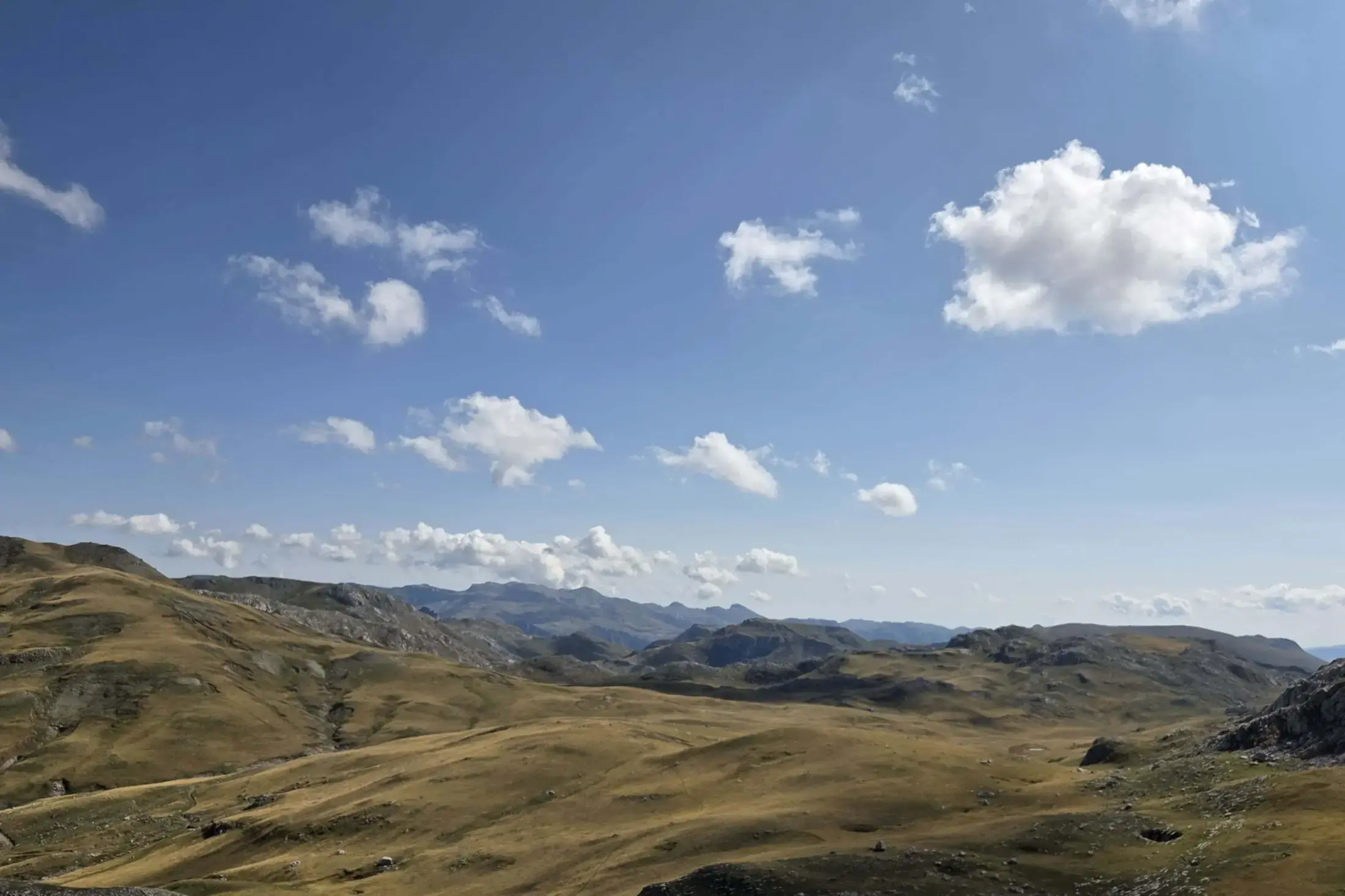
Heat behaves differently depending on where you are. Sarajevo sits at around 500 metres and summer days regularly feel hot in the city, while the plateaus of Bjelašnica and Visočica at 1,500 metres and above usually stay comfortable. Herzegovina is another story entirely: the lower Neretva valley around Mostar gets seriously hot, which is why ferrata routes there are best climbed in the morning.
The single most effective adjustment is simply starting early. An 8 a.m. trailhead instead of an 11 a.m. one means climbing in cool air, summiting before the haze builds, and being on descent, or at lunch, when the day peaks. Most of our summer departures are built around this logic.
Use this guide for planning, then check current weather, route conditions, access, and tour details before choosing a date.
Afternoon thunderstorms are the second pattern. Hot, humid days over the Dinaric ranges build cumulus through midday, and storms most often arrive mid-to-late afternoon. Exposed ridgelines, summit pushes, and via ferrata cables are exactly where you do not want to be when that happens, which again argues for early starts and honest turnaround times.
Water planning gets stricter in summer. The karst terrain that defines ranges like Prenj swallows surface water, and springs that run in May can be dry by August. Two litres per person is the floor for a full summer hiking day, more on long exposed routes, and a guide who knows which sources are currently flowing is worth a great deal.
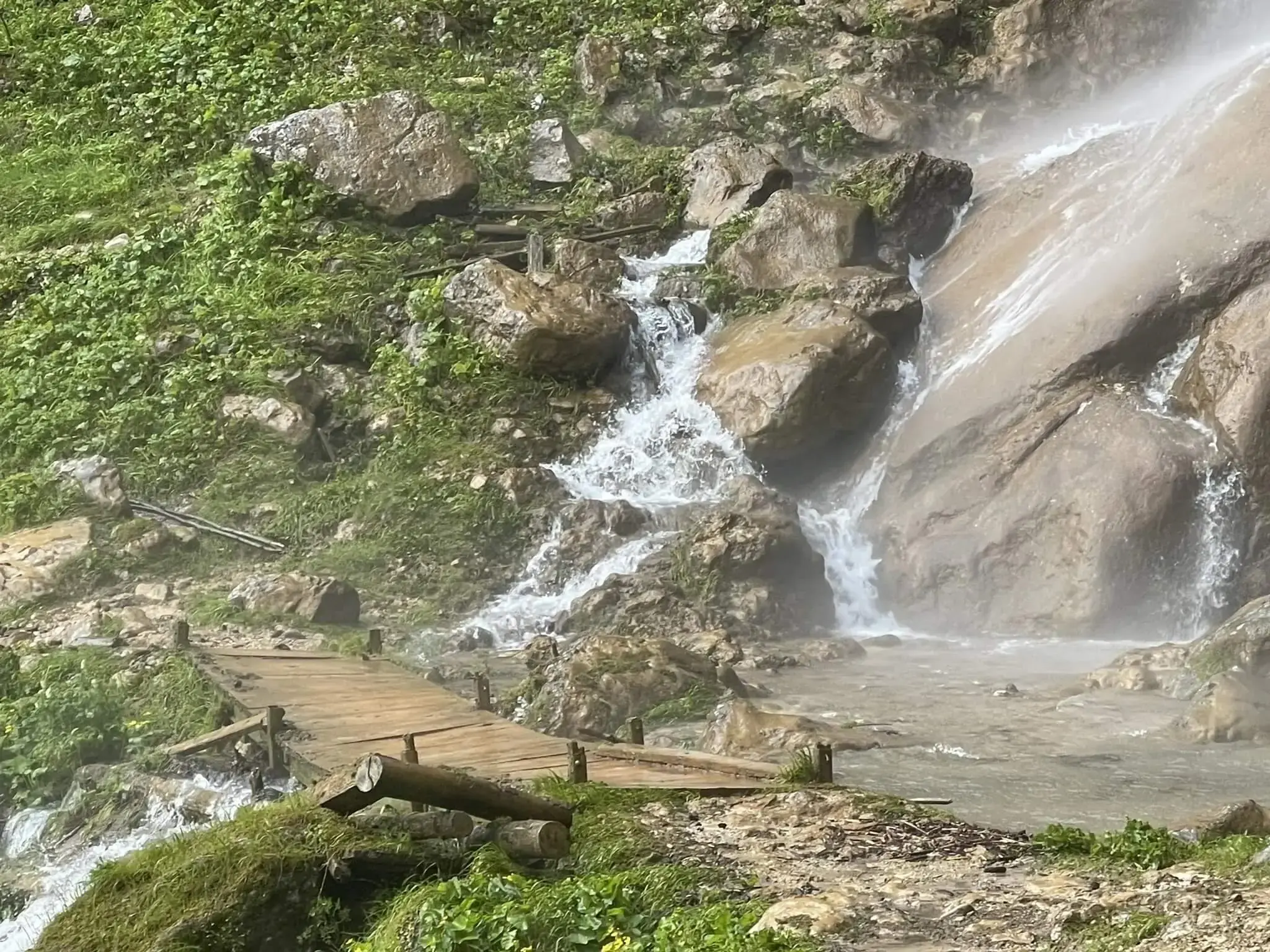
Route choice can also follow the thermometer. On genuinely hot days, the shaded forest-and-waterfall routes such as Skakavac earn their keep, staying pleasant when open plateaus bake. Mid-mountain villages like Lukomir, with food and shade at the halfway point, are another heat-friendly format.
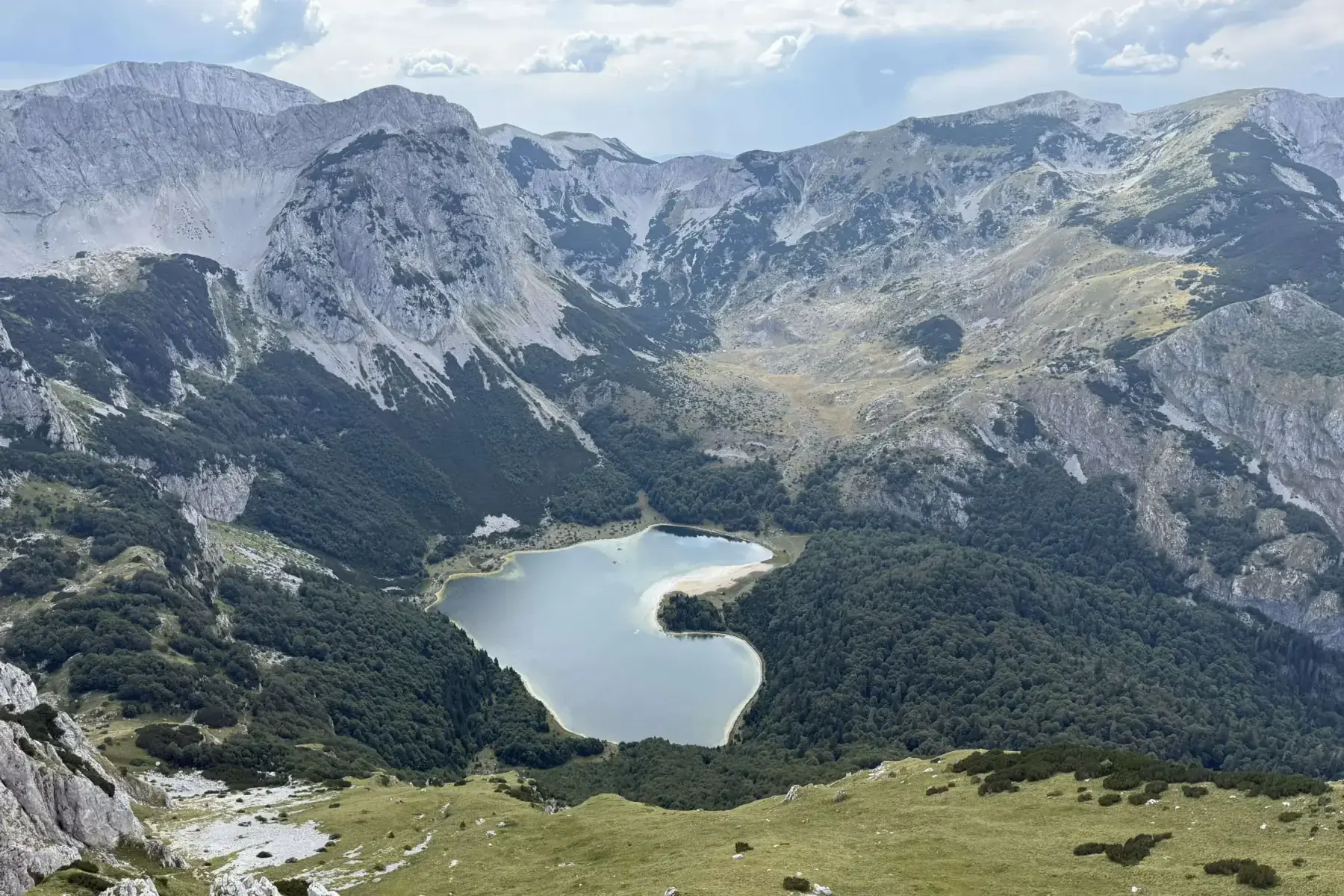
Do not let the storm talk scare you off the big objectives. Maglić, Prenj, and the high traverses are at their most accessible in summer, and with early starts and a flexible day or two of buffer in your itinerary, the weather is a scheduling detail rather than a deal-breaker.
What to pack changes less than people expect. Sun protection moves to the top of the list and water volume goes up, but the warm layer and rain shell stay in the bag even in August. Wind on a 2,000-metre ridge after a storm front feels nothing like summer in the valley.
The short version: hike high or hike shaded, start early, carry real water, and keep one flexible day somewhere in the plan.