What to know before you go
Bosnia has quietly built one of the better via ferrata scenes in the Balkans, with protected routes inside day-trip range of both Sarajevo and Mostar. The question we hear most is not whether to try one, but which one. The routes differ more than their photographs suggest, and matching the route to your experience is the difference between a highlight and an ordeal.
Start with the honest question: have you done a via ferrata before, and how do you handle exposure? Not fitness in the gym sense, but the specific feeling of standing on steel rungs with open air underneath you. Everything else in route choice follows from that answer.
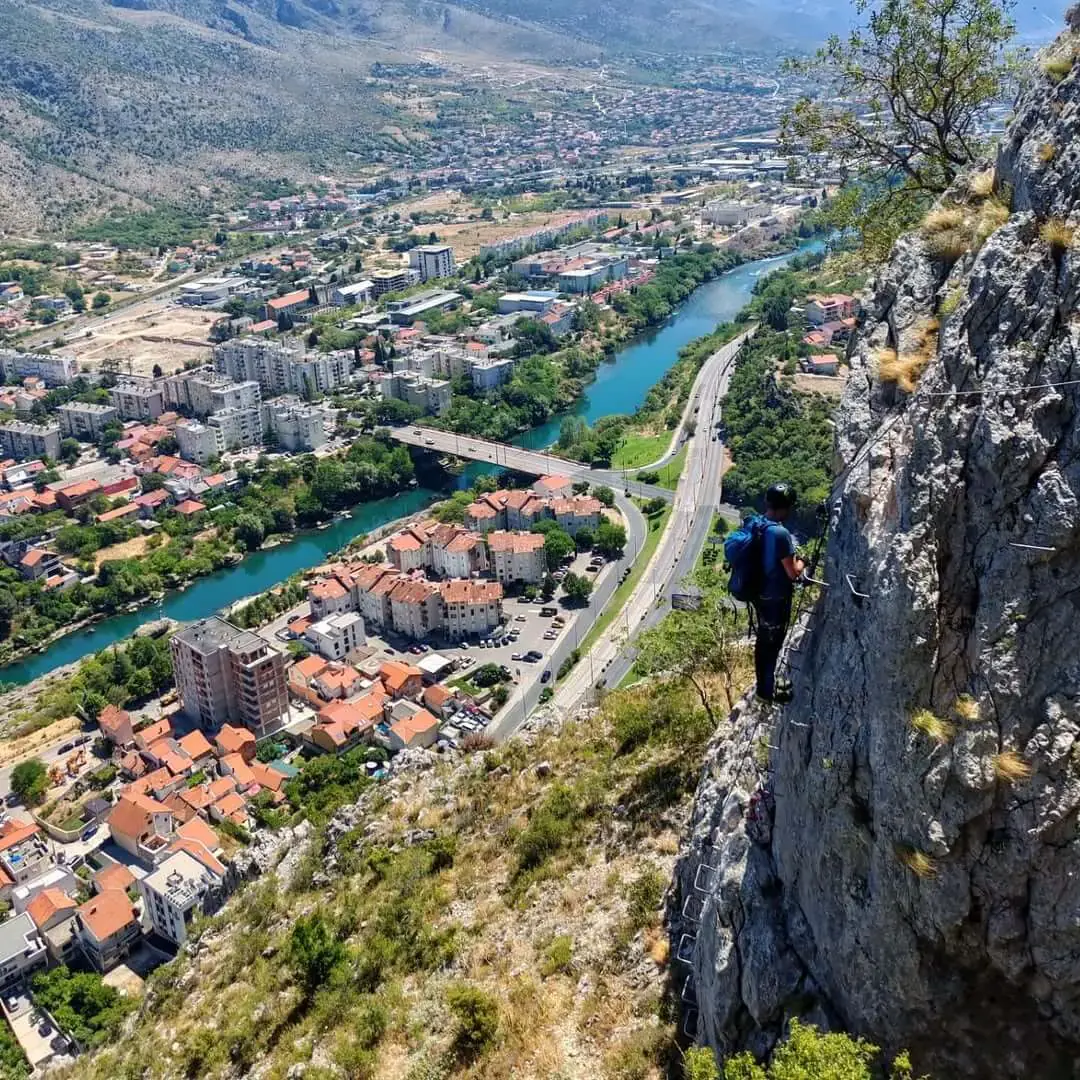
Fortica, above Mostar, is the classic first route. The approach is short, the climbing is well protected, and the views over the city and the Neretva valley turn up almost immediately. If you want a first taste of ferrata wrapped inside a Mostar day trip, this is the natural pick.
Use this guide for planning, then check current weather, route conditions, access, and tour details before choosing a date.
Hum has a similar introductory character with an atmosphere of its own, and it suits travellers who want the climbing to be one part of a broader day rather than the whole objective. Like Fortica, it works for first-timers who are reasonably active.
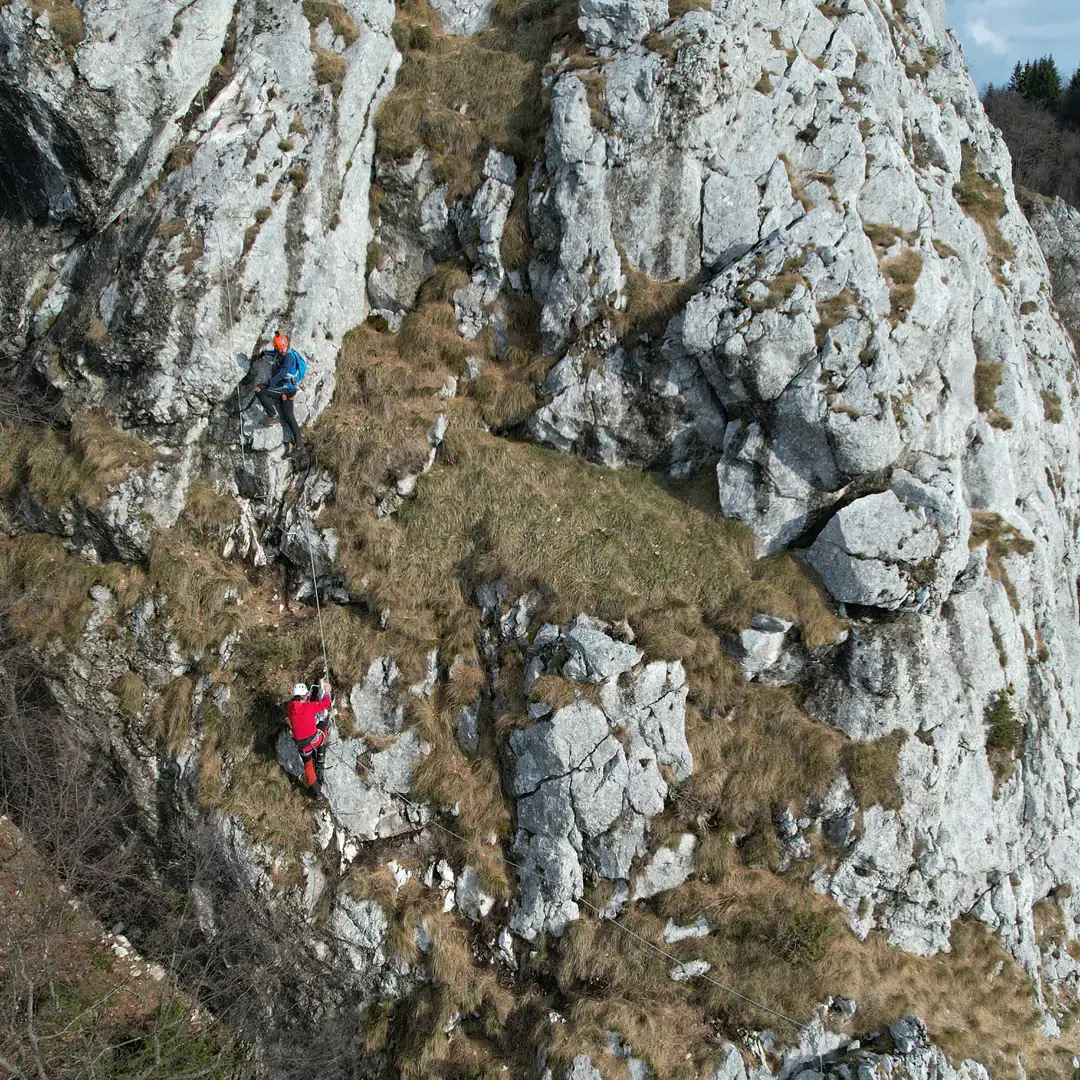
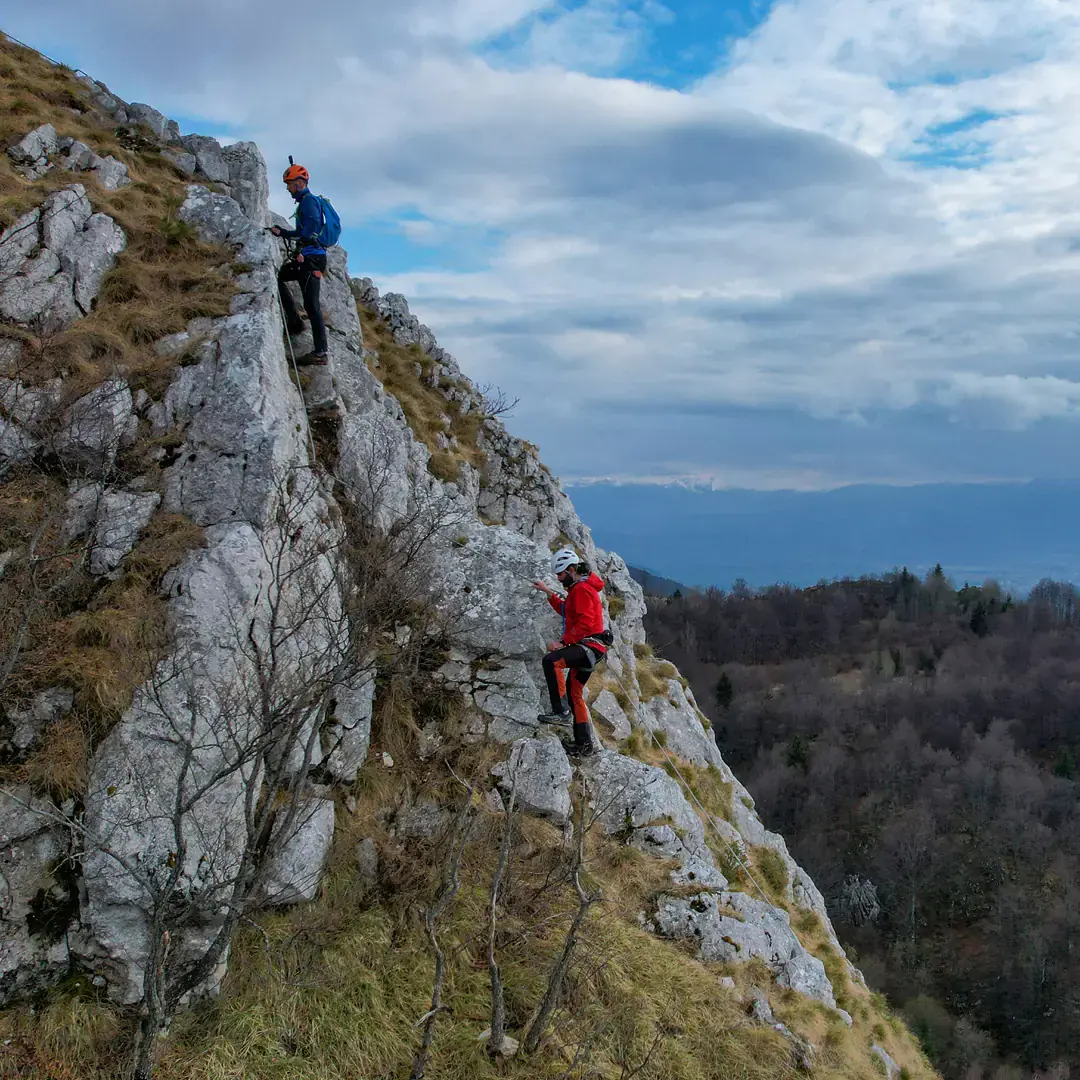
Bukovik, closer to Sarajevo, steps the commitment up. The route is longer, the terrain more varied, and you want to arrive with either one previous ferrata behind you or genuine comfort on exposed hiking ground. What you get for that is a fuller mountain day where the climbing sustains rather than just introduces.
Bijele Stijene and the other routes in the Sarajevo orbit fill out the progression: more length, more exposure, more time on the wire. These are the routes to grow into rather than start on. The progression is real, though, so a first-timer in spring can be climbing the bigger lines by the end of the same season.
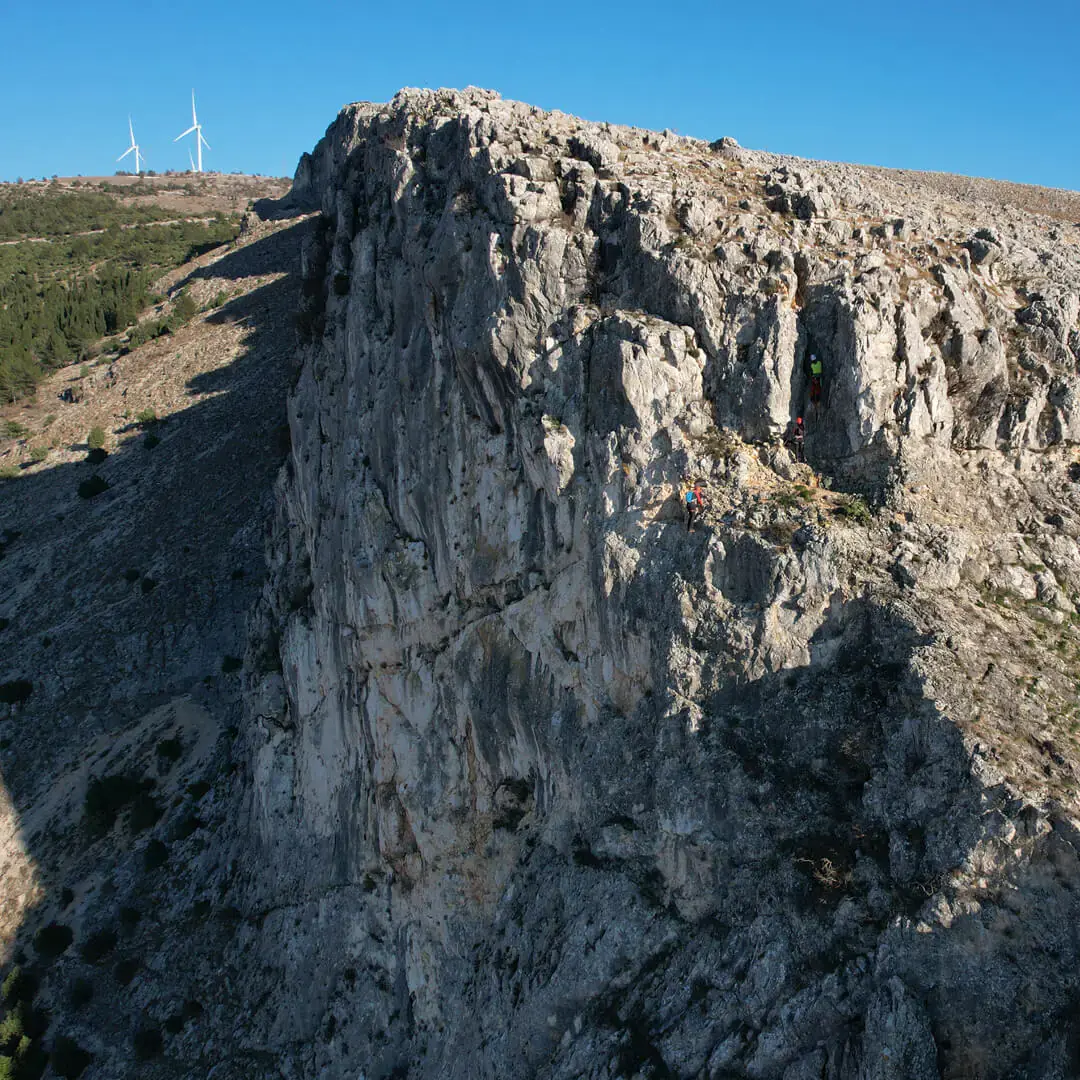
For experienced ferratists, Prenjska Vrata is the standout: a protected line into the Prenj massif that puts serious mountain atmosphere behind the security of a cable. It matters less for its grade than for where it puts you.
Whichever route you pick, the equipment is the same. Helmet, harness and an energy-absorbing lanyard are mandatory, and on a guided trip they are included and fitted for you. A via ferrata accident is almost always an equipment-use accident, which is why we are strict about the briefing even on the easy routes.
The season runs spring through autumn, with summer mornings strongly preferred on the sun-exposed lines. If you have one day and no experience, take Fortica or Hum. If you have two, do an easy route first and a bigger one second. The two-day version is how most of our repeat guests got hooked.