What to know before you go
The short answer: clothes you can move in, shoes with real grip, and enough layers to cope with the mountain changing its mind. What you are after is comfort and friction. Looking like a climber is not part of it.
Shoes are the decision that matters. Sturdy hiking shoes or light approach shoes with a firm sole work best for most people. Soft running shoes are a poor choice here, because you spend a lot of the day standing on steel rungs and small edges, and a sole that twists underfoot makes all of that feel less secure than it is.
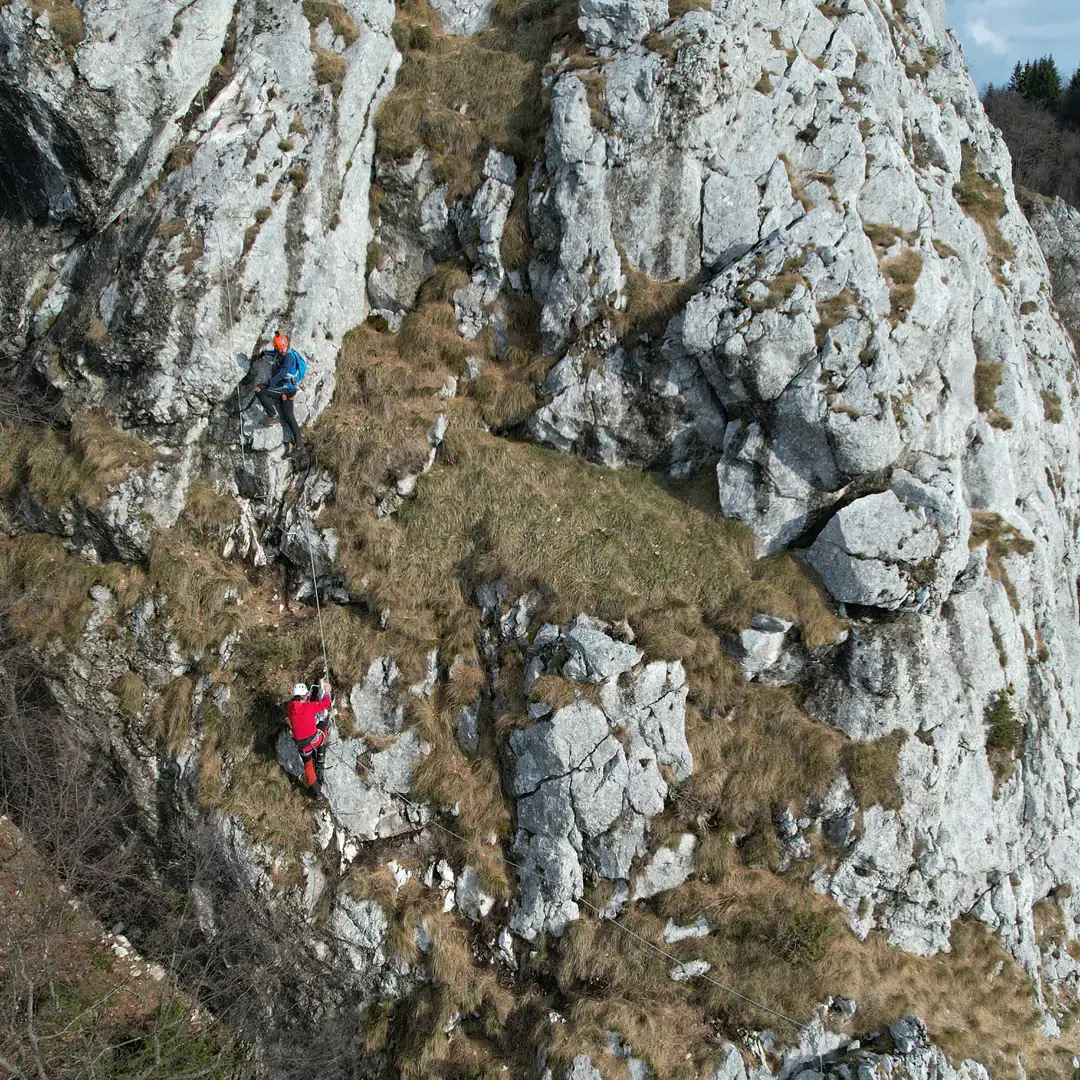
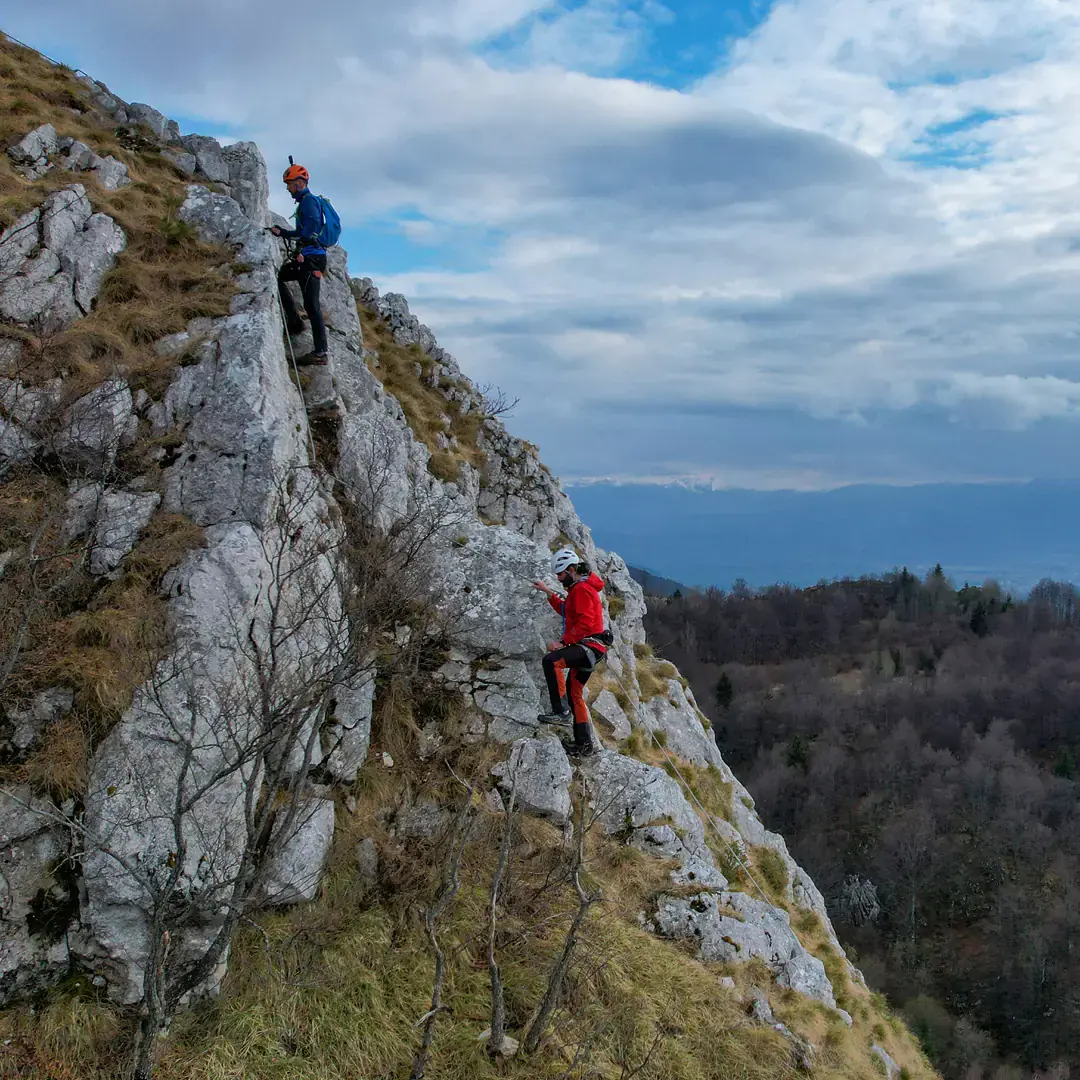
For clothing, pick something you can step high and bend in. Trousers or shorts that will not snag on the harness, and a top that breathes on the walk in. Leave the bulky jacket in the bag unless the morning is genuinely cold, because you warm up fast on a cable.
Use this guide for planning, then check current weather, route conditions, access, and tour details before choosing a date.
Bring light gloves. They save your hands on the steel, make clipping more comfortable, and help on rough limestone. Cycling gloves, work gloves and ferrata-specific ones all do the job. Which model you own matters much less than having something between your palm and the cable.
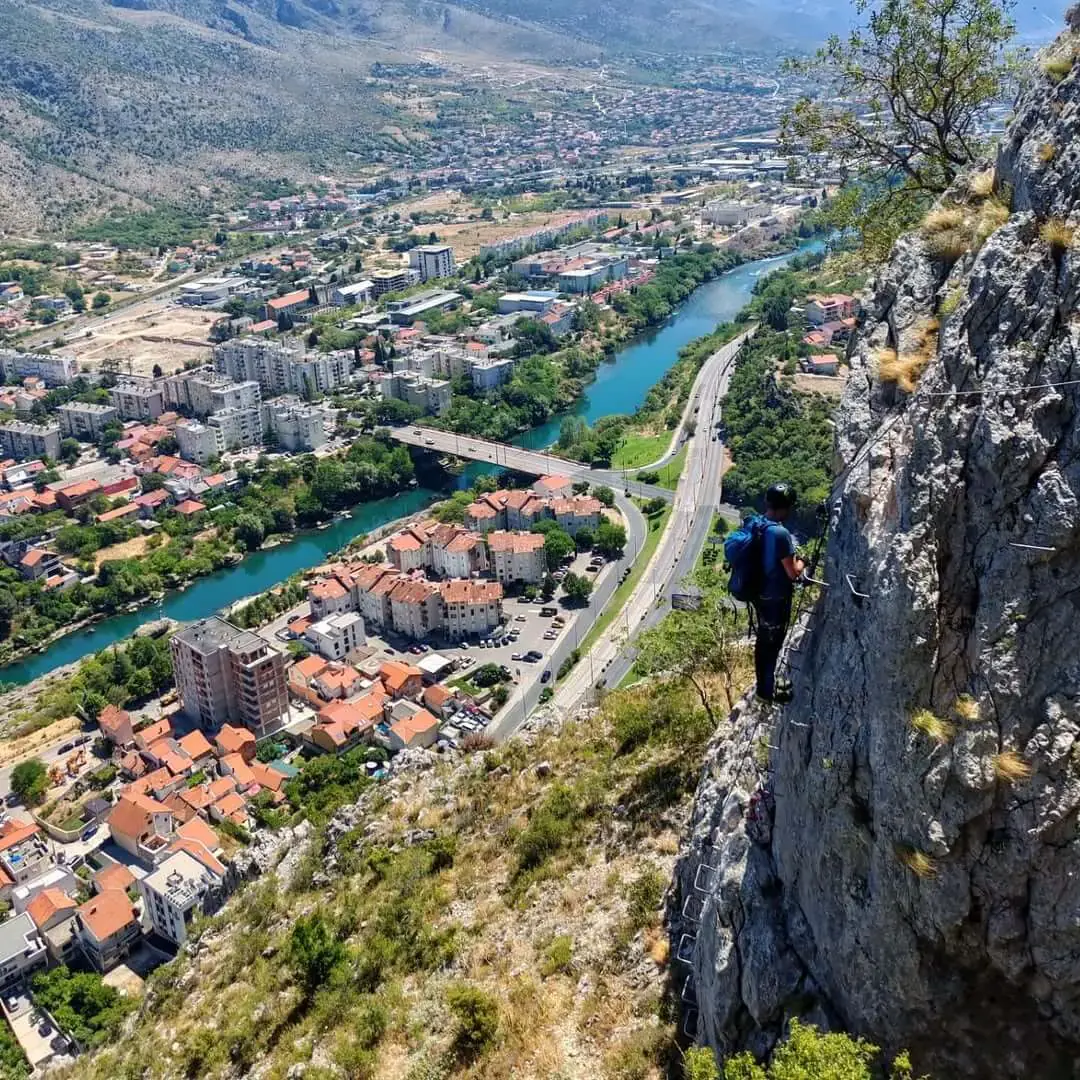
How you layer depends on season and route. Spring and autumn days near Sarajevo tend to start cold and turn warm the moment the sun reaches the wall, so a thin mid-layer and a packable shell cover it. In summer, starting early does more for you than any amount of clothing, particularly on the exposed Herzegovina routes.
A small backpack is worth it if the approach is longer or the weather is unsettled. Water, sun protection, a spare layer, and whatever small things you need, in something that does not pull you around when you move. On the shorter routes we usually keep guests carrying as little as possible.
Helmet, harness and lanyard get fitted to you on the day rather than guessed from a packing list online. They are part of the technical system, and a good fit does more for you than gear brought from home, unless you already know yours and know it is in good condition.
Dress for movement, then handle temperature with light layers. If your shoes grip, nothing is restricting you, and you are covered against sun and cable abrasion, the clothing question is settled and you can think about the climbing instead.