What to know before you go
April to October is the working season for via ferrata in Bosnia and Herzegovina, but the best month inside that depends on the route, its altitude, and how much heat you are willing to put up with. The short version: shoulder season, almost always.
April and May are very good. Temperatures are moderate, the rock usually dries out over the course of a clear morning, and the approaches are green and empty. Around Sarajevo this is probably the best balance the year offers between stable conditions and comfortable climbing temperatures.
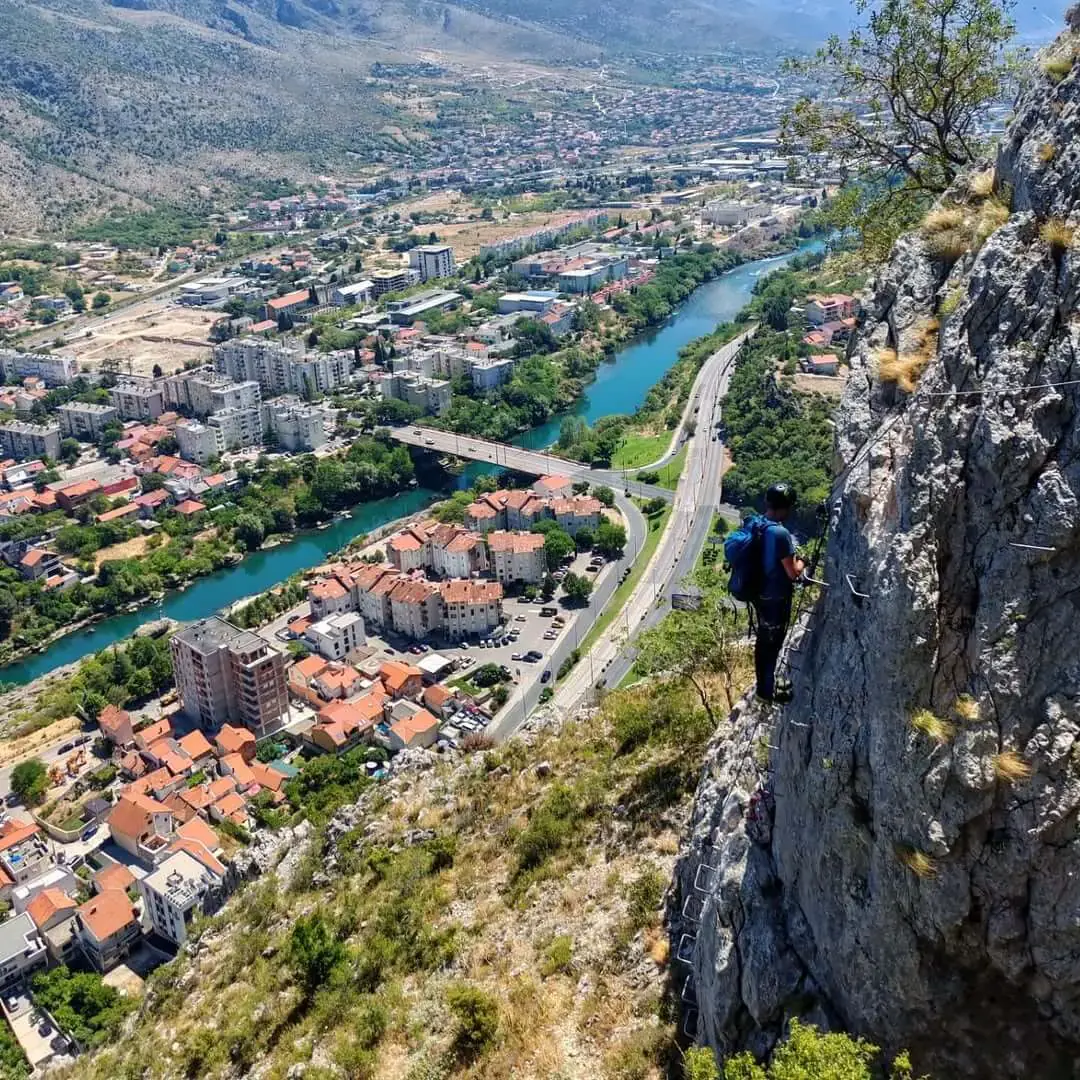
June through August still works, but it wants an early start and a route that holds shade or catches morning sun rather than the afternoon. In Herzegovina the heat stops being a comfort question and turns into a planning one. The routes near Mostar and further into the Neretva canyon run much hotter than the forecast implies once the rock has been in the sun a few hours.
Use this guide for planning, then check current weather, route conditions, access, and tour details before choosing a date.
September and October are the other good window, and for a lot of guests the better one. The air cools, visibility sharpens, and the crowds have gone home. You move more efficiently on rock when you are not also managing heat.
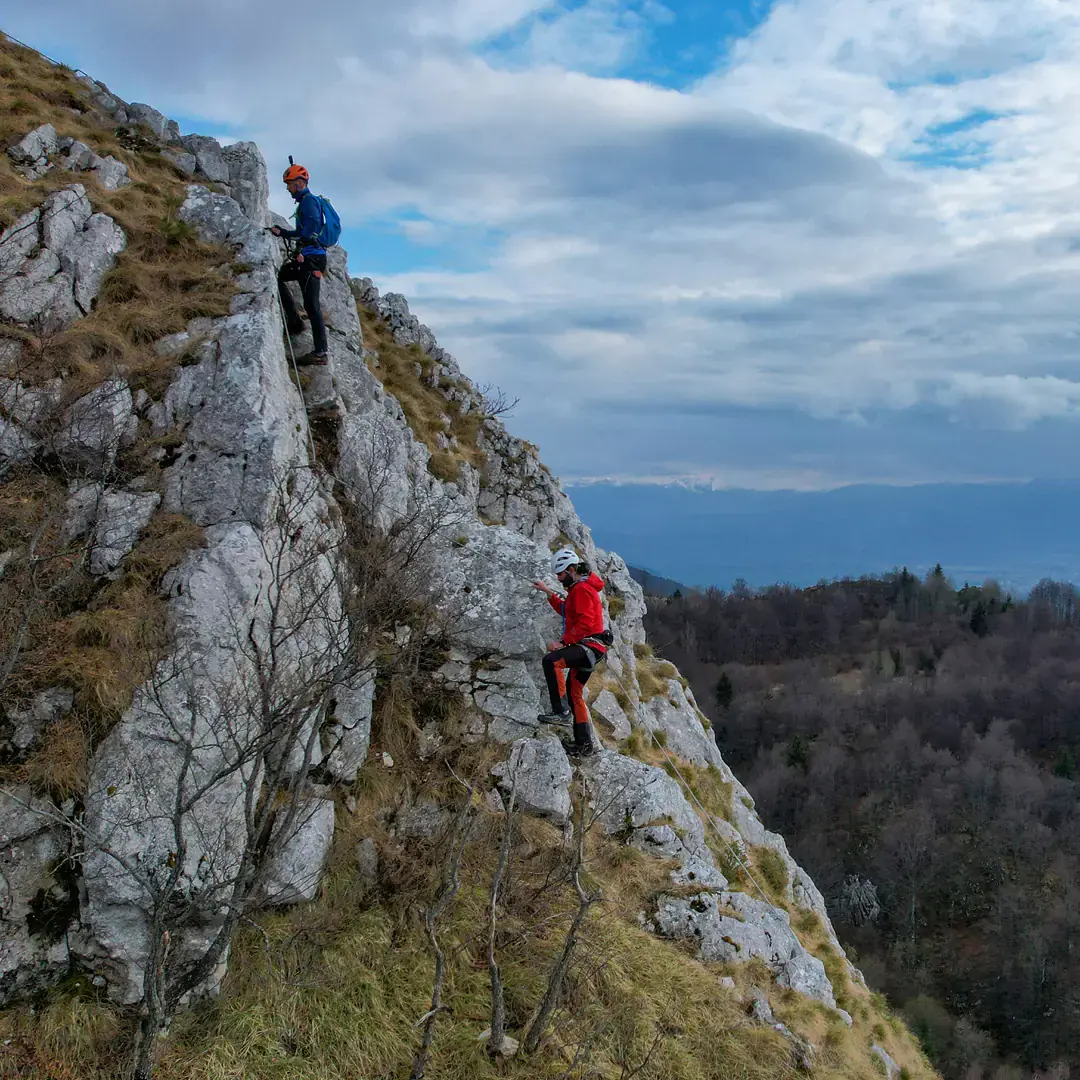
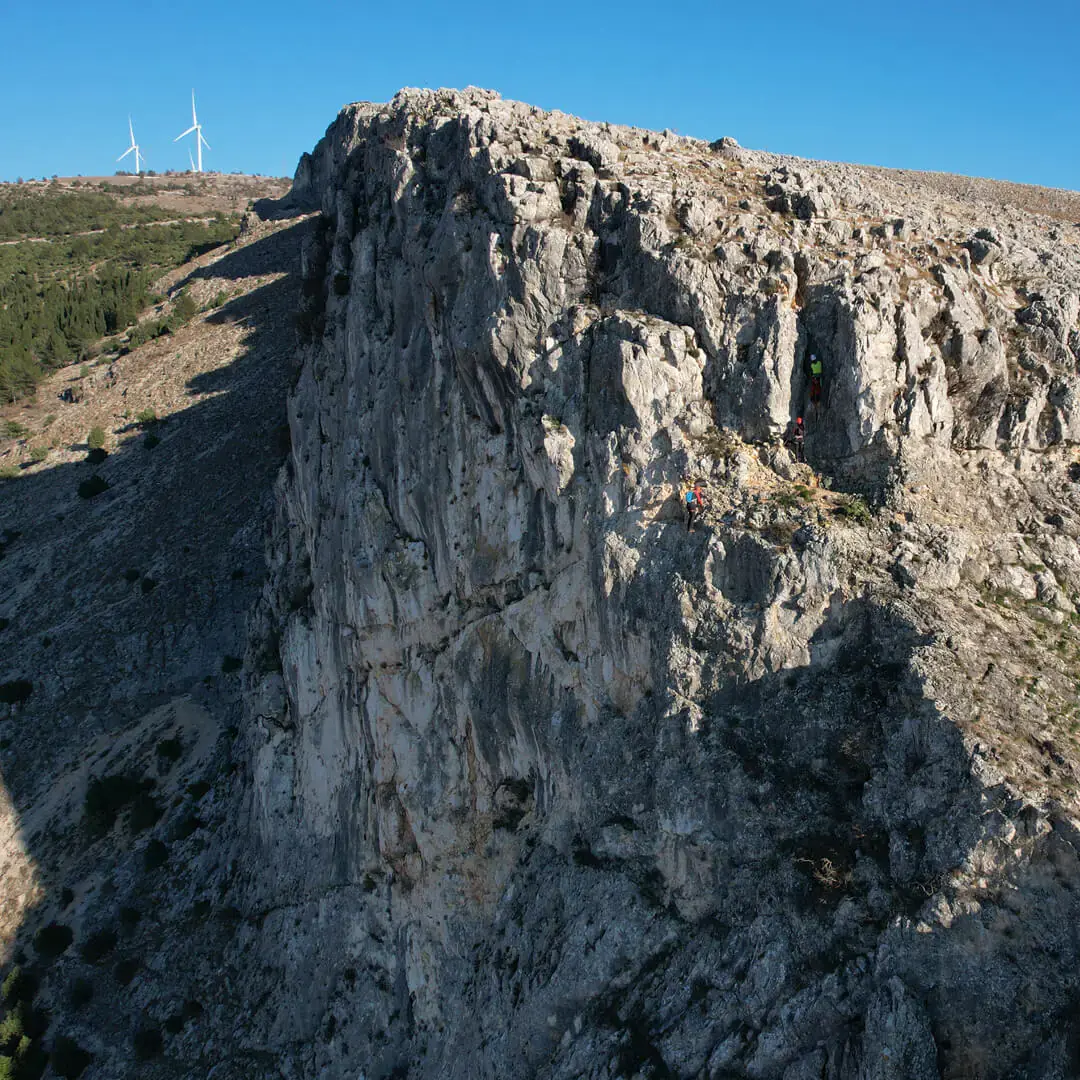
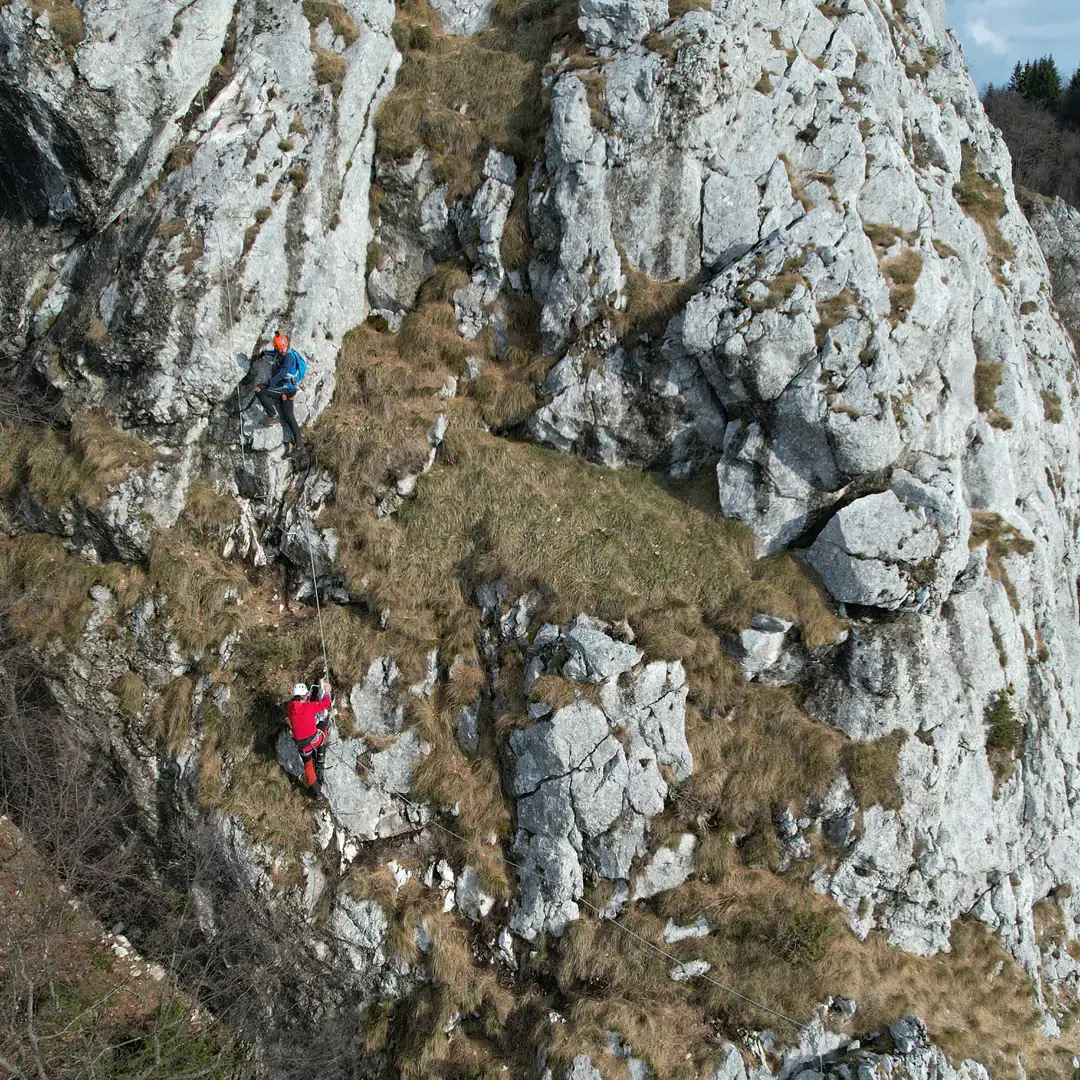
Individual routes behave differently. Bukovik holds up across a wide part of the season because it sits at moderate altitude and dries reasonably fast. The more exposed routes, Bijele Stijene among them, change character with wind and recent rain, which is why we choose the route against current conditions rather than a date on the calendar.
Winter ferrata is technically possible on a few of the lower routes, and we generally advise against it. Short daylight, cold steel, wet limestone and the chance of ice on the footholds add up to a slow, joyless day. The aim is a good climb, not proving the route will go.
For a first ferrata, book outside the hottest weeks of summer and stay away from unsettled weather. Better friction, fewer people and less heat stress make it much easier to learn the clipping rhythm and how to move on exposed ground. A first day should feel controlled rather than hurried.
We check route-specific forecasts and wind exposure in the days before a tour, then confirm the route on the morning itself. If the weather is wrong for ferrata we move the date or swap to something better suited. We do not run marginal conditions.